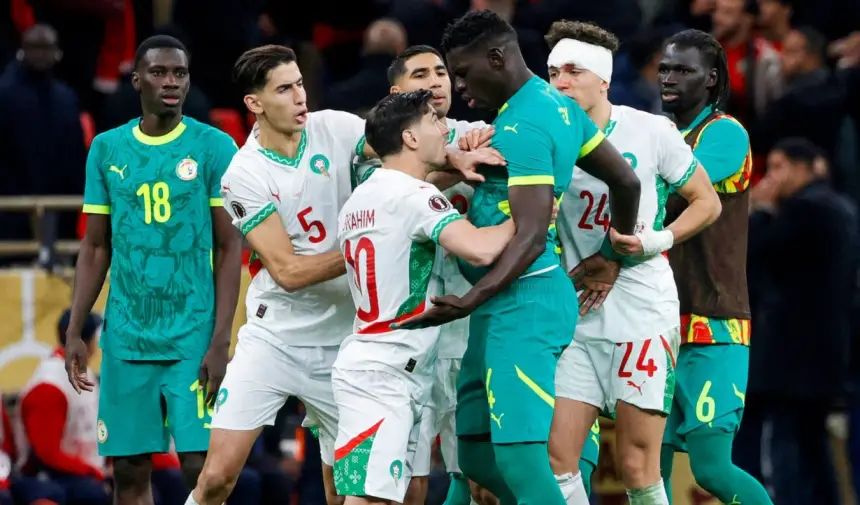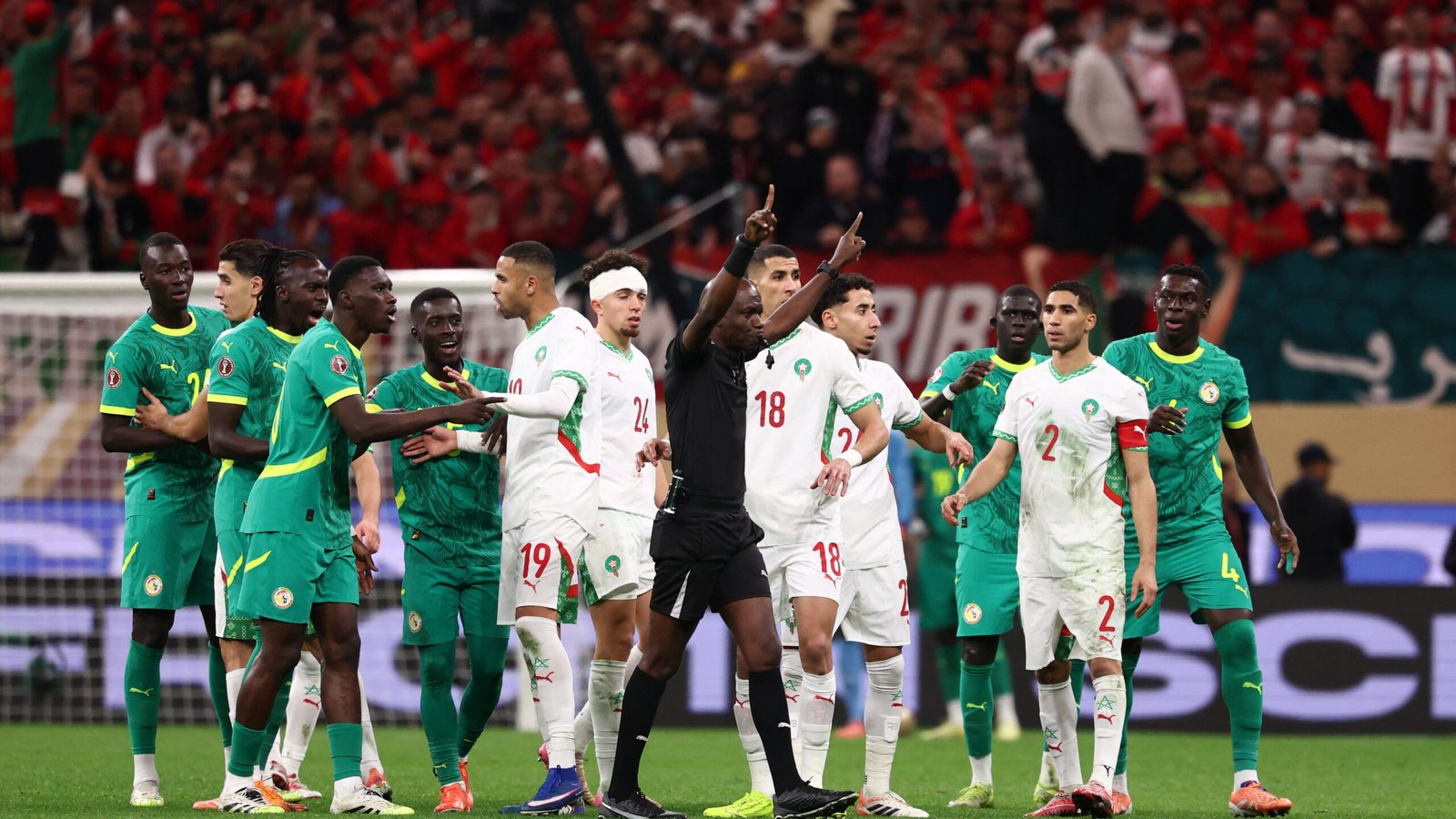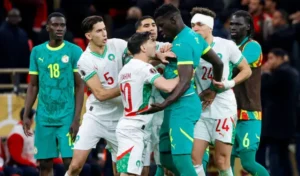
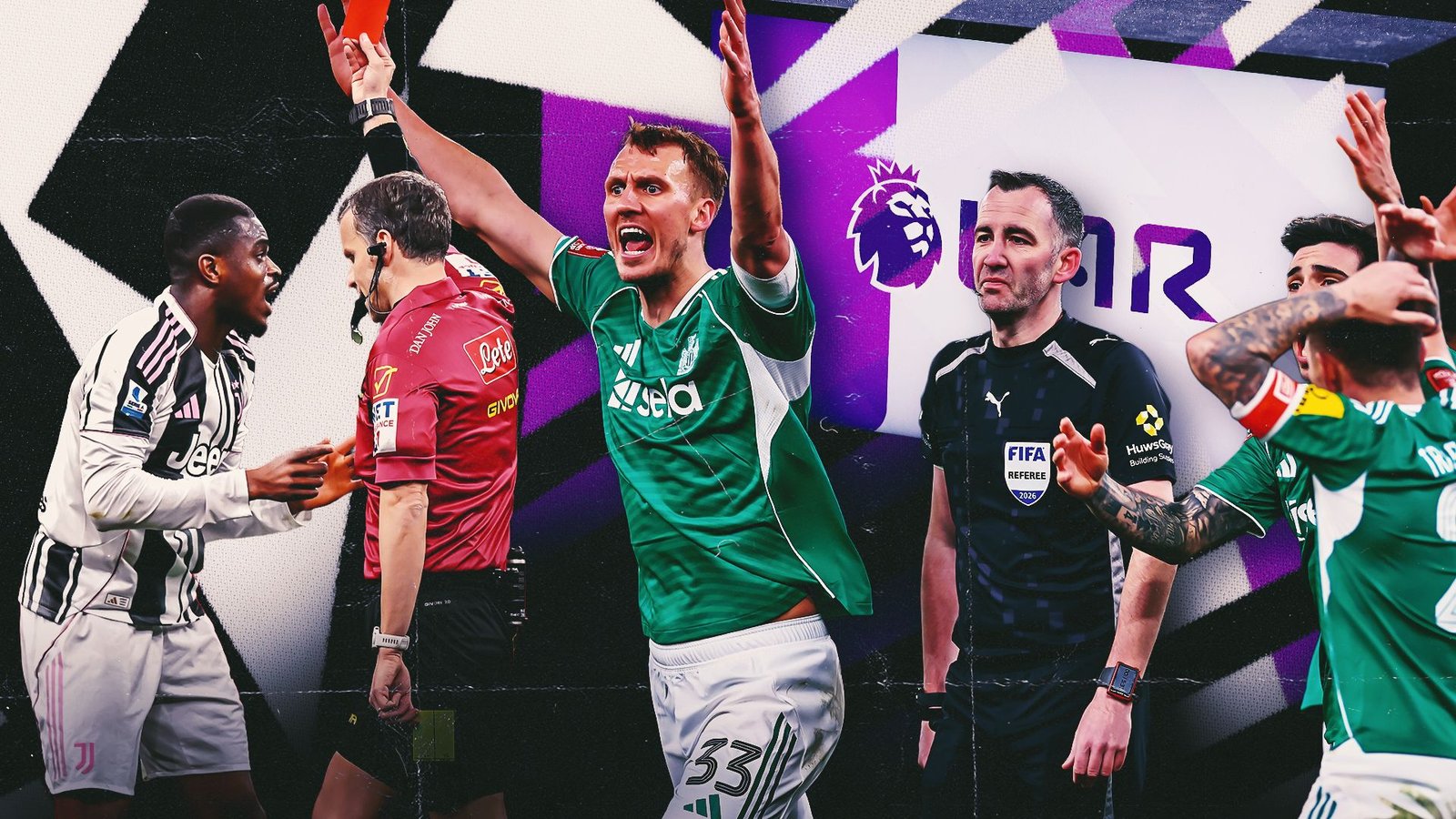
Football’s officials are under the spotlight again, and the game is running out of patience. Refereeing controversies are no longer occasional talking points — they are dominating weekends, shaping results and turning post-match discussion into arguments about decisions rather than performances.
VAR was brought in to reduce those moments. Instead, it has helped create a new kind of chaos. The technology was sold as a way to fix “clear and obvious” mistakes, but it has become a system that regularly slows the game, confuses supporters and leaves players and managers frustrated by decisions that still feel inconsistent.
One week it is handball. The next it is offside lines drawn to the millimetre. Then it is a red card that looks different depending on which angle you see first. VAR has not removed controversy — it has changed its shape, and often made it worse because fans now expect certainty that rarely arrives.
The biggest issue is trust. Supporters can accept honest mistakes in a fast sport. What is harder to accept is watching long delays, multiple replays and technical explanations, only to end up with a call that still looks wrong — or at least impossible to understand. It leaves everyone asking the same question: what is the point of this?
That is why football has to act quickly. The sport cannot afford to let refereeing become the main story every week. If VAR cannot be applied with speed, clarity and consistency, then the authorities must be brave enough to rethink it entirely — even if that means scrapping it.
Keeping VAR simply because it is already here is not an answer. If the system is creating more anger than confidence, it is damaging the product. Football should be about goals, drama and big moments, not waiting for a referee in a booth to decide whether an armpit was offside.
This is not an argument for going backwards for the sake of it, and it is not a defence of poor officiating. It is a call for a solution that works. If that is a better version of VAR, fine. But if the sport cannot make it work, then football must admit the experiment has failed and move on.
The longer the game delays action, argues over interpretations and changes outcomes after long pauses, the more it risks losing what makes it special. Refereeing will never be perfect. But it cannot continue like this.