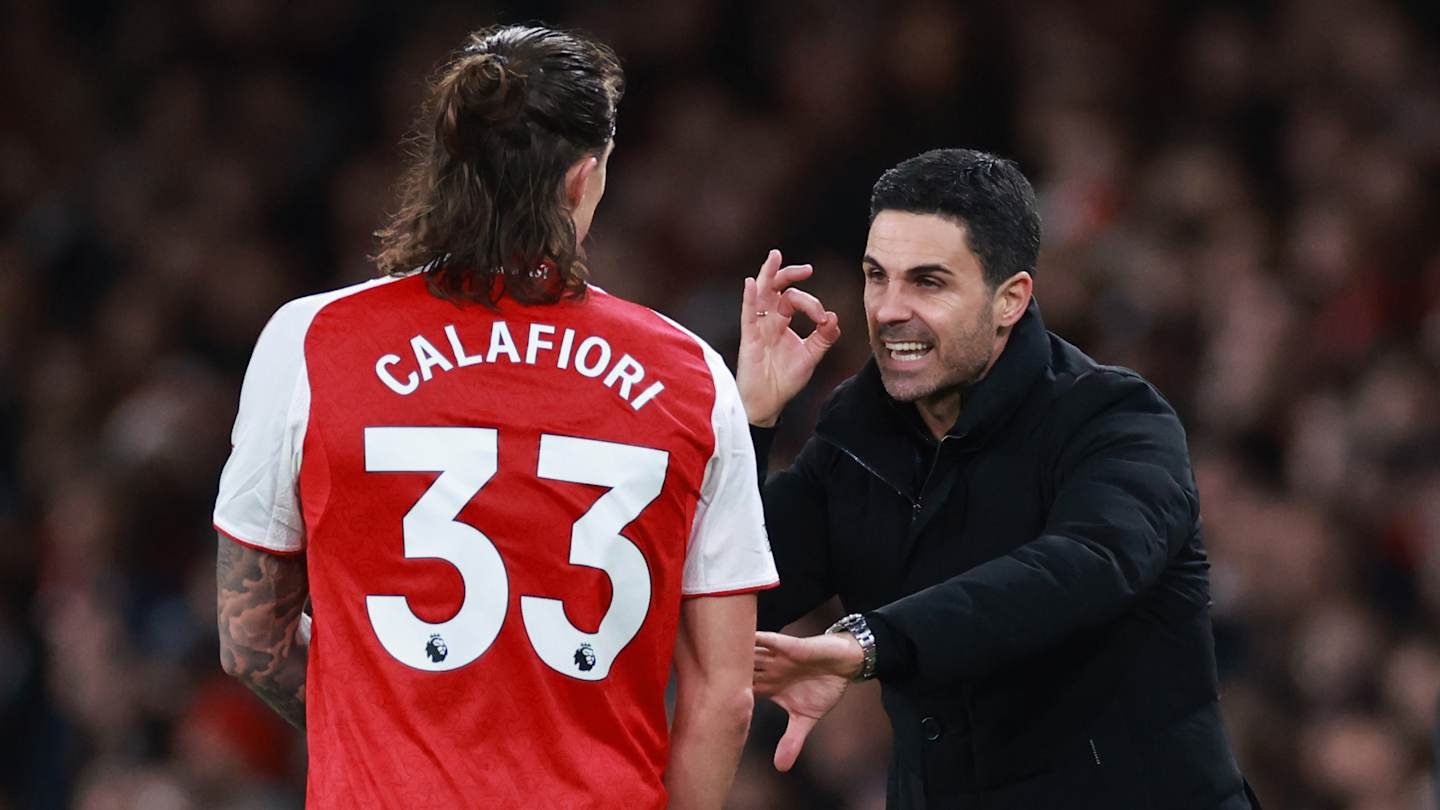
Arsenal’s pursuit of Riccardo Calafiori was never going to be a standard negotiation. The club wanted the defender early in the window, but it quickly became clear that the final push would be led by Mikel Arteta himself—and in a way that felt more personal than most modern transfer pitches.
Calafiori, 22, arrived in north London with a growing reputation after a strong season that put him on the radar of several European sides. Arsenal had been tracking him for months and viewed him as a defender who could add balance across the back line, offering the versatility to play as a left back or in the middle. The club’s interest was serious, but convincing the player was always going to be a key step.
That is where Arteta’s approach stood out. While many managers will call, present a tactical plan and leave the rest to sporting directors, Arteta has built a reputation for getting deeply involved in recruitment. Those close to Arsenal’s recent deals have learned that his communication can be intense, direct and specific—often framed around how a player will grow inside his system rather than what they have already achieved elsewhere.
In Calafiori’s case, the conversation went beyond the usual highlights reel and promise of trophies. Arteta is understood to have painted a detailed picture of life at Arsenal: the demands of training, the responsibility of building attacks from the back, and the small adjustments he wanted from the Italian to reach the next level. It was less a sales pitch and more a plan, delivered with the urgency of a coach who expects immediate buy-in.
Those discussions resonated. Calafiori has spoken in the past about wanting the right environment and the right coach, and Arsenal believed they could offer both. The club’s recent progress under Arteta—competing at the top end of the Premier League and returning to the Champions League—gave the manager’s words extra weight. This was not a rebuild being sold as a dream; it was a team already close to the biggest prizes, adding pieces to go even further.
Arsenal’s staff also felt the player’s profile fit what they were missing. Calafiori’s comfort on the ball and his willingness to step into midfield areas suit a side that often asks its defenders to take risks in possession. His athleticism and aggression in duels were viewed as tools that could translate quickly to English football, while the coaching staff believed the rough edges could be refined with time.
Once the player was convinced, Arsenal moved to complete the deal and beat off competition. Transfers of this size can be complicated, especially when multiple clubs show interest and negotiations stretch into details around fees and structure. But Arsenal’s confidence grew as the talks progressed, with Arteta’s direct involvement seen as the difference-maker at the decisive moment.
For Arsenal, the signing is another example of how the club’s transfer strategy has evolved. Recruitment is now closely tied to the manager’s tactical demands, and the message to targets is consistent: Arsenal want players who are ready to learn, accept coaching and contribute to a collective idea. Arteta’s role is not simply to approve signings; he is often central to winning them.
Calafiori now faces the challenge that comes with any Premier League move—adapting to the speed, the physicality and the scrutiny. Arsenal, however, believe he will not be walking into the dressing room cold. The relationship began before he ever pulled on the shirt, shaped by a manager who chose an uncommon route to get his man—and, in doing so, nudged the transfer over the line.