“`html
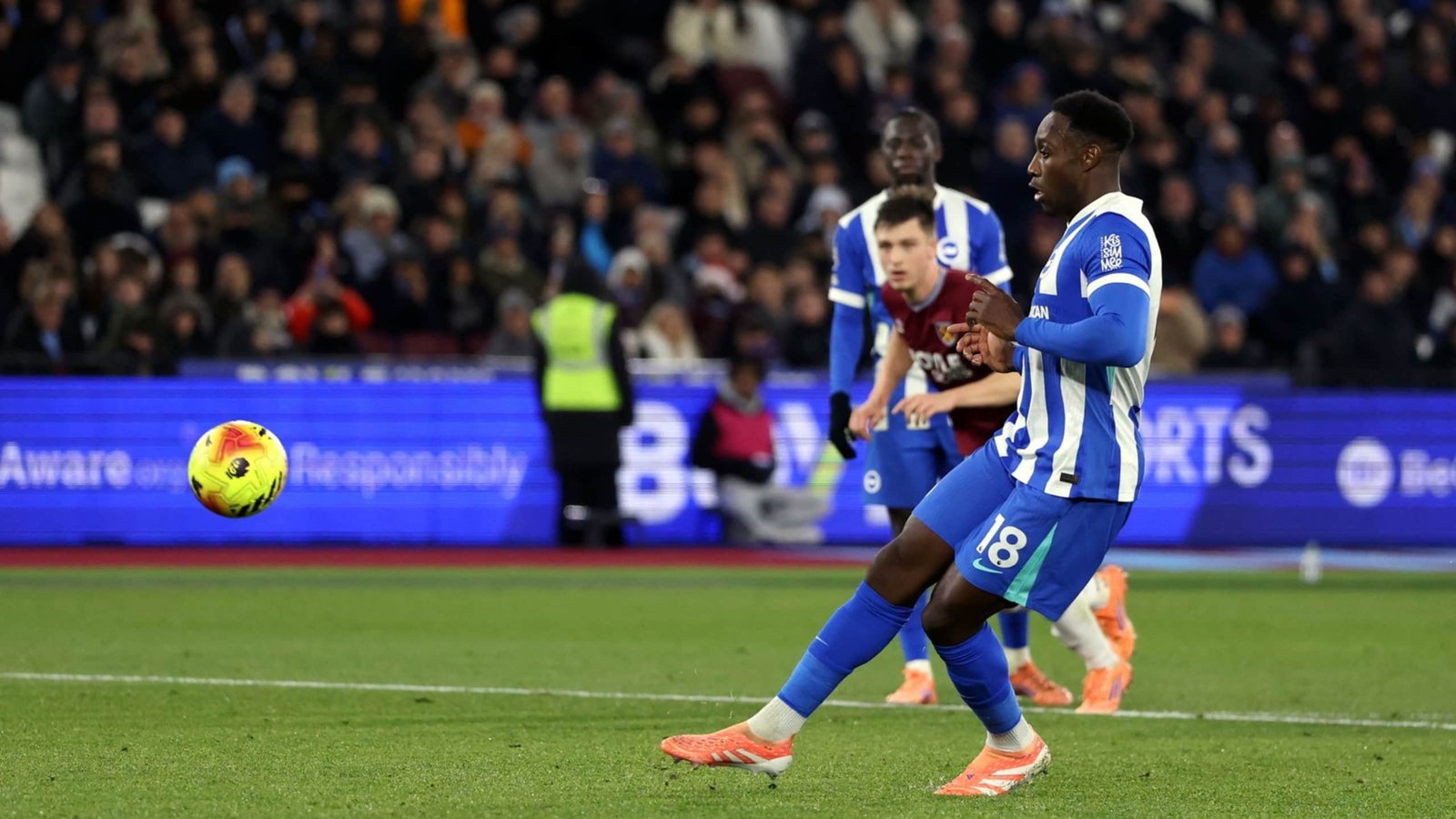
Brighton & Hove Albion and West Ham United played out a tense 0-0 draw in a Premier League encounter marked by a highly scrutinized moment involving Danny Welbeck. The forward’s attempted Panenka penalty, which struck the crossbar, became the focal point of post-match discussions, overshadowing a competitive but goalless stalemate at the Amex Stadium.
The match itself was a typical league contest with both sides exhibiting cautiousness and disciplined defensive structures. Brighton created a handful of promising opportunities through their quick transitions and inventive wing play, but West Ham’s defensive solidity kept them at bay. Conversely, the visitors found it difficult to penetrate the home side’s well-organized defensive block, relying largely on set-piece situations to threaten the goal.
Early in the second half, West Ham earned a crucial penalty when a Brighton defender was adjudged to have fouled inside the box. Danny Welbeck stepped up confidently to take the spot-kick, attempting a Panenka lob—a daring and psychological approach meant to exploit the goalkeeper’s anticipated movement. However, the gamble did not pay off; the ball clanged back off the crossbar, eliciting disbelief from players and fans alike.
The missed penalty had significant implications not only for the match outcome but also for Welbeck’s reputation. The forward, experienced and often commended for his work rate and versatility, faced sharp criticism online and from pundits who questioned the wisdom of such a high-risk choice at that moment. Many analysts highlighted the psychological gamble associated with Panenka penalties, describing Welbeck’s miss as a “rare misjudgment” in a game where precision and caution seemed warranted.
Despite the setback, West Ham pressed on in search of a breakthrough but were met with resolute resistance. Brighton, for their part, grew more confident as the match progressed, maintaining possession and testing the opposition’s defense with incisive passing sequences. However, neither side could convert their chances, resulting in a point apiece that neither fully relished.
From a tactical perspective, Brighton employed a combination of high pressing and patient build-up play, while West Ham relied on quick counters and physicality in midfield battles. The clash showcased the tactical depth present in the Premier League, with managers on both benches making adjustments to influence the tight contest. Substitutions were tactical, aimed at either adding defensive reinforcement or injecting fresh attacking impetus, but ultimately neither team altered the scoreline.
Critically, the missed penalty served as a pivotal moment—a stark reminder of the thin margins separating victory from frustration in football. It also sparked a broader debate about the appropriateness of Panenka penalties in high-stakes environments, particularly when the outcome could define crucial league points. Traditionalists in the sport often advocate for straightforward, powerful finishes in such moments, whereas others argue that psychological tactics, when executed flawlessly, can demoralize opponents and become iconic highlights.
This latest incident involving Welbeck adds to the ongoing narrative of Premier League drama where moments of individual brilliance or miscalculation can sway the course of matches, seasons, and careers. While the draw keeps the mid-table tussle tight, it also leaves both clubs reflecting on missed opportunities and areas for improvement.
Looking ahead, Brighton and West Ham will aim to build momentum from this result as they head into upcoming fixtures. Brighton, keen to secure European football aspirations, will focus on tightening their attacking efficiency and maximizing their home advantage. West Ham, striving to climb the table, must address composure in critical moments and seek consistent goal-scoring contributions to complement their defensive efforts. Fans will be eagerly anticipating how each side responds to these challenges as the Premier League season advances.
“`