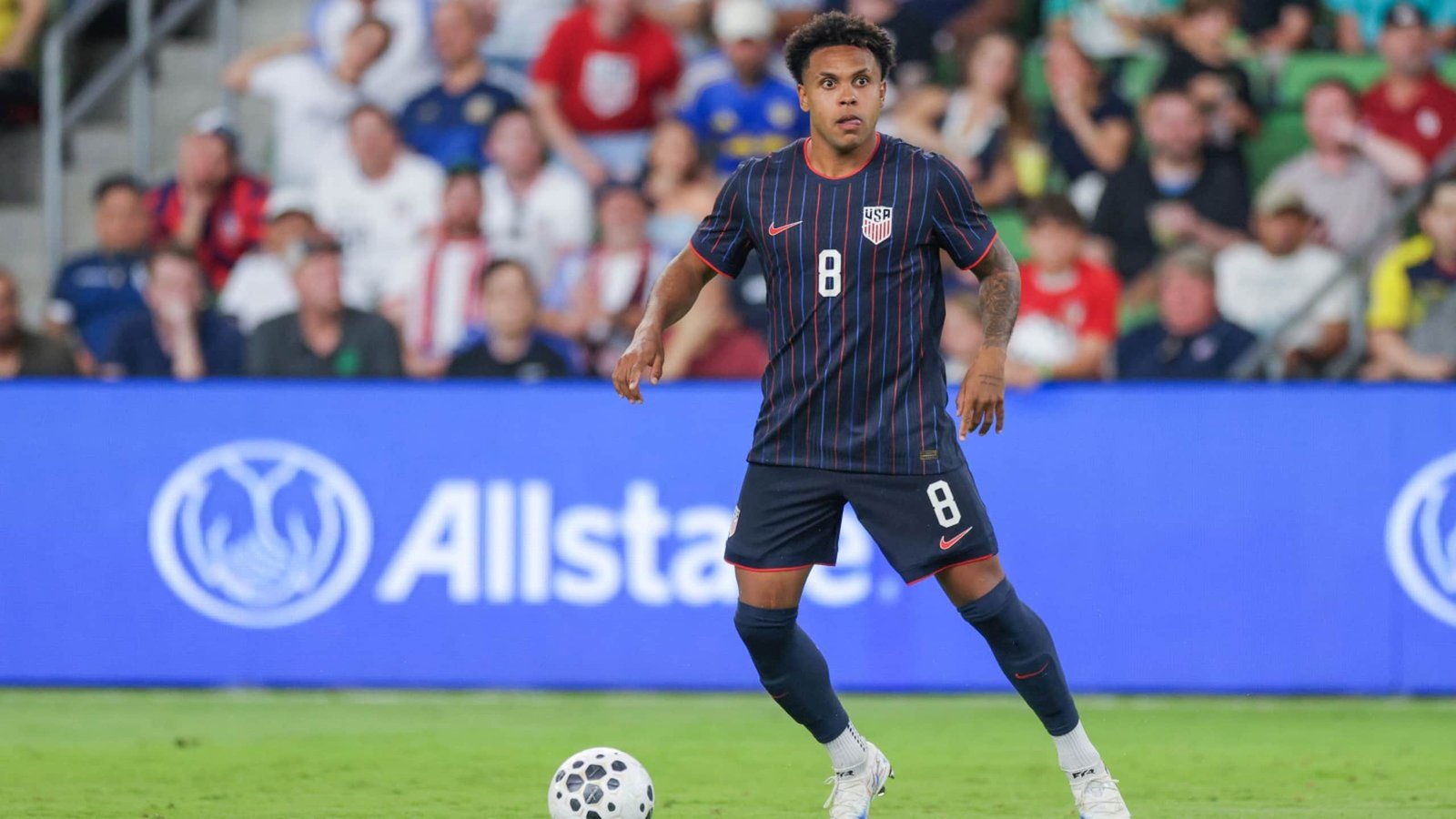
Former U.S. Men’s National Team (USMNT) defender and analyst Alexi Lalas has voiced strong support for Weston McKennie amid the ongoing debate surrounding his inclusion in the US squad for the upcoming World Cup. Despite recent concerns about the midfielder’s form and off-field issues, Lalas emphasized that McKennie’s undeniable talent and potential contribution on the field overshadow any negatives.
McKennie, who has been part of the USMNT setup for several years, remains a pivotal figure in coach Gregg Berhalter’s plans. However, his recent performances and disciplinary matters have sparked conversation among fans and pundits about whether he is the right fit for a World Cup roster demanding consistency and peak preparation.
Lalas, leveraging his extensive experience with the USMNT and in the broadcast booth, argued that McKennie’s skill set provides a critical edge to the team’s midfield dynamics. “It often does outweigh the bad,” Lalas noted, expressing confidence that McKennie’s qualities, including his versatility, work rate, and ability to influence the game, make him an indispensable asset.
The Juventus midfielder has demonstrated a rare blend of physicality and technical ability, making him valuable not only in defensive midfield roles but also when pressed into more advanced positions. Despite some erratic performances, Lalas believes McKennie’s raw talent and occasional flashes of brilliance have the capacity to lift the USMNT’s collective play on football’s biggest stage.
McKennie’s journey has not been without challenges. Injuries and changes in club environment have sometimes hampered his rhythm, while isolated instances off the pitch have invited criticism. Nevertheless, Lalas maintained that these issues have been overblown in contrast to the player’s overall importance to the squad. “His value on the field is something that cannot be ignored,” Lalas added, highlighting McKennie’s leadership qualities and resilience under pressure.
Coach Gregg Berhalter has faced difficult decisions assembling a balanced and competitive team for the World Cup, weighing experienced campaigners against emerging talents. McKennie’s status as a World Cup veteran provides a level of maturity and international exposure that younger players are still working towards. Lalas suggested that dismissing McKennie’s presence would risk undermining the team’s tactical flexibility and cohesion.
Moreover, McKennie’s ability to connect the defense and attack affords the USMNT more fluid transitions during matches, a critical factor against elite competition. Lalas pointed out that in tight World Cup group stages, moments of individual brilliance can be decisive, and McKennie’s sporadic bursts of creativity could prove invaluable.
While some critics argue the midfielder must prove consistency at the club level to justify his World Cup spot, the analytical perspective held by Lalas focuses not only on recent form but also on long-term impact. “You can sometimes afford to have a player who isn’t perfect but has the capability to change a game,” he stated, underscoring the balance between risk and reward in tournament squad selections.
As the United States prepares to take on some of the world’s strongest football nations, McKennie’s inclusion remains a talking point. Lalas’ endorsement serves as a reminder of the complexity behind team selection and the importance of trusting proven talent, even when there are concerns surrounding consistency or discipline.
Looking ahead, the USMNT faces high expectations to build on their recent successes in international competitions. McKennie’s role, whether as a starter or key squad player, will be monitored closely throughout the tournament. His ability to rise to the occasion under intense pressure could greatly influence the team’s progress and overall performance.