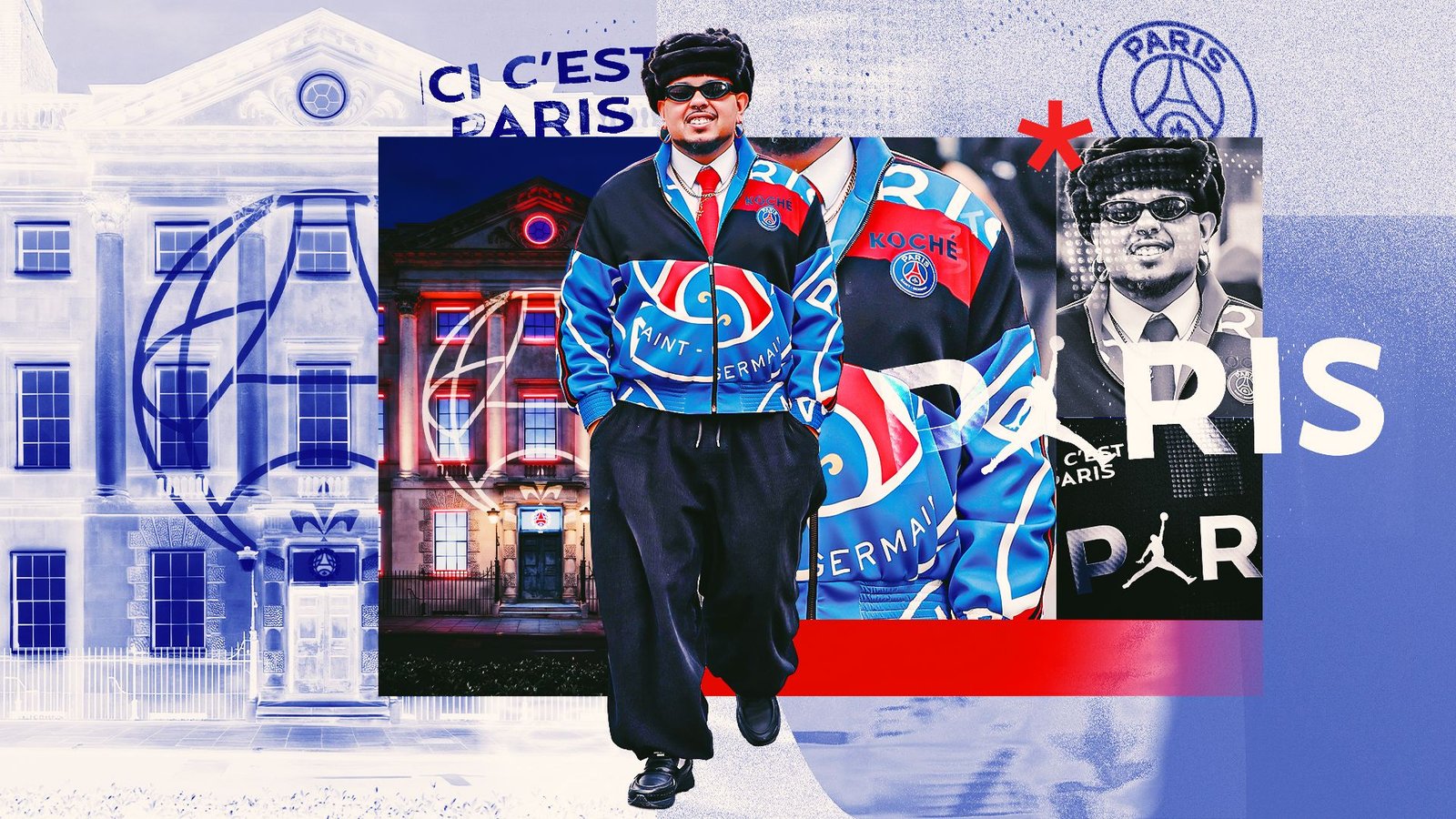
Paris Saint-Germain arrive in London carrying far more than just a football team. Ahead of their latest visit to the English capital, the French giants have grown into a global cultural force, built as much on fashion, music and celebrity as on results on the pitch.
The club’s transformation began in earnest after Qatar Sports Investments took control in 2011, turning PSG into a project designed to dominate in France and compete with Europe’s elite. The spending that followed brought superstar names, but it also helped push PSG into spaces most clubs rarely reach — runways, record studios and front rows at major events.
PSG’s rise has been shaped by a clear strategy: make the badge mean something beyond the Parc des Princes. That meant leaning into Paris’ status as a world capital of style and culture, then exporting that image globally. The club became a brand, with football at the centre but not the only pillar.
A key moment in that shift was PSG’s link-up with Jordan Brand, a partnership that blurred the lines between sport and streetwear and helped the club break into new markets. PSG kits and collaborations stopped being just matchday items and became fashion statements, worn by fans who might not have watched 90 minutes but still wanted to be part of the identity.
In the same way, PSG’s star power has consistently pulled the club into pop culture. Big-name signings brought huge followings, and the club’s social media presence grew with them, turning PSG into one of the most visible teams on the planet. Their players became icons, and their matches became events.
London has played its part in PSG’s story too, with the city acting as one of the club’s key stages outside France. From fan engagement to brand visibility, PSG have repeatedly targeted the UK capital, using it as a gateway to a wider international audience.
Crucially, the club’s modern identity has not been built solely on trophies. PSG have used Paris itself as a selling point — its music, its art, its street culture — and packaged the club as a symbol of the city’s energy. The aim has been clear: to stand out in a crowded football landscape by offering something different.
Now, as PSG prepare for another London takeover, they do so as a club that has tried to redefine what a modern giant looks like. The project has always been about more than football, and whether loved or criticised, PSG have made themselves impossible to ignore.